White-hat link building has a reputation problem: everyone agrees it works, nobody agrees to show the arithmetic. So here is the arithmetic — the cost per link, the conversion path from link to revenue, and the payback timeline — run on numbers that practitioners, platforms, and agency rate cards put in public. The conclusion, previewed: earned links are a slow asset with a real, calculable ROI that most organizations abandon one budget cycle before it pays.
The cost side, honestly stated
Earned links are expensive per unit. Reconstruct the cost of one digital PR campaign from public rate cards:
- Research and data: $3,000–$8,000 (survey panel costs, dataset cleaning, analyst time).
- Content and design: $2,000–$6,000 (writer, designer, data visualization).
- Pitching desk: $4,000–$10,000 per month of senior comms labor.
- Tools and platforms: $500–$1,500 per month (media databases, monitoring).
A competent campaign — one story, one month of pitching — runs $10,000–$25,000 and reliably earns 10–40 placements from a good asset, with a fat tail: strong data studies continue collecting links for two or three years. Effective cost per link at delivery: $300–$1,500. Amortized over the asset's life: often under $100.
Compare the white-hat alternatives that lack the asset: guest posting on real publications (from $300–$2,000 per post in production plus acceptance odds), expert commentary placements (cheap in cash, expensive in time), and tools or calculators built purely to attract citations ($15,000–$50,000 up front, lowest cost per link over time).
The revenue side, traced link by link
A link earns money through four documented paths:
- Ranking value. The link contributes to page authority, which contributes to organic traffic, which converts. Model it: 15 quality links to a bottom-of-funnel page that moves it from position 9 to position 4 on a 5,000-search keyword at a 3% conversion rate and $200 average order — using public click-curve estimates, the position change is worth roughly 700–1,000 monthly visits and $4,000–$6,000 in monthly revenue. That single page can repay the entire campaign inside a quarter and keeps paying.
- Referral traffic. Real publications have readers. A placement in a top-10 industry outlet sends hundreds of targeted visits in its first week — the purchased link's zero is visible here.
- Brand search lift. Coverage generates branded queries, which convert at multiples of generic traffic and reduce paid-search dependence. Measurable in any analytics platform within weeks of a campaign.
- Sales-enablement value. "As covered in [outlet]" closes deals. Sales teams use earned media as proof; the value shows up in cycle length, not analytics.
The payback timeline, and why budgets die at month nine
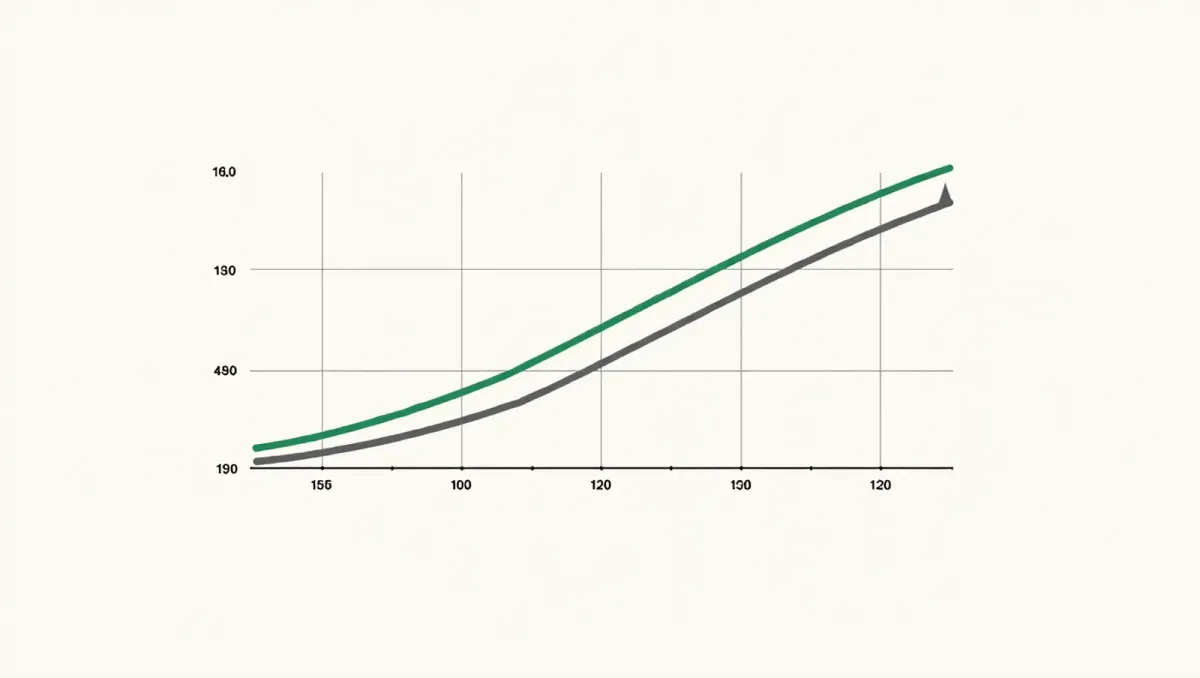
Run the honest curve: months 1–3 cost the full campaign spend with partial recovery; months 4–8 the placements' ranking and referral value builds; months 9–18 the asset compounds — new citations arrive without spend, rankings consolidate, brand search lifts paid efficiency. Most organizations kill the program between months 6 and 10, exactly where the compounding starts, then conclude "PR didn't work" from the truncated curve. The purchased-link alternative shows its full (decaying) effect inside 90 days — which is why procurement loves it and why the three-year ledger favors the slow asset roughly 4:1 in surviving value.
The failure modes that are really process failures
- Asset quality. A story journalists have written before earns nothing. Research effort is not a line item to optimize away.
- Pitching volume without targeting. Conversion is per-journalist fit, not spray; 40 targeted pitches beat 400 template sends on every documented metric.
- No landing infrastructure. Links pointed at a homepage with no conversion path waste the traffic they earn. Campaign ROI requires the page to exist and to convert.
Where the math can still fail
The honest case for earned links should state its own failure conditions. The model above breaks under four documented conditions. One: asset quality below the market's noise floor — a story journalists have already told does not earn placements at any pitching volume, and the campaign's fixed costs then produce link counts near zero. Two: conversion infrastructure gaps — links to pages that cannot convert turn ranking gains into traffic without revenue, a measurement failure that punishes PR for the product's problems. Three: keyword-value overestimation — the ranking-value path assumes the targeted query has commercial value; campaigns aimed at vanity terms rank beautifully and pay nothing. Four: churn in the pitching function — relationships are the compounding mechanism, and a desk that turns over annually resets the trust curve. Each failure mode is addressable, and none is inherent to the channel: they are process defects that purchased links hide rather than fix, because invoiced links produce the appearance of success under any process. The discipline that separates working programs from dead ones is keeping the unit-economics page current — actual cost per link, actual revenue per path — so failure is diagnosed at month three, not post-mortemed at month twelve.
How to protect the investment
- Commit to three campaigns before judging. One campaign is a data point; three is a portfolio with a fat tail.
- Track survival and citations monthly — the asset's accumulation curve is the program's real KPI, not month-one link counts.
- Attribute across all four revenue paths, including brand search and sales enablement; measuring only last-click makes earned media look free-of-value.
- Build the landing page before pitching. Every link should arrive at a page designed to convert it.
- Set the procurement metric to survived-link velocity, not referring-domain counts, so the program cannot be quietly swapped for purchased inventory.
- Keep the unit economics on one page: cost per link at delivery, cost per link amortized, revenue per ranking position, payback month. If the page cannot be produced, the program is not a program — it is a hope with an invoice.
White-hat links are not slow magic. They are a capital expenditure with a published payback curve — and the arithmetic, done honestly, is the strongest sales pitch the honest market has.