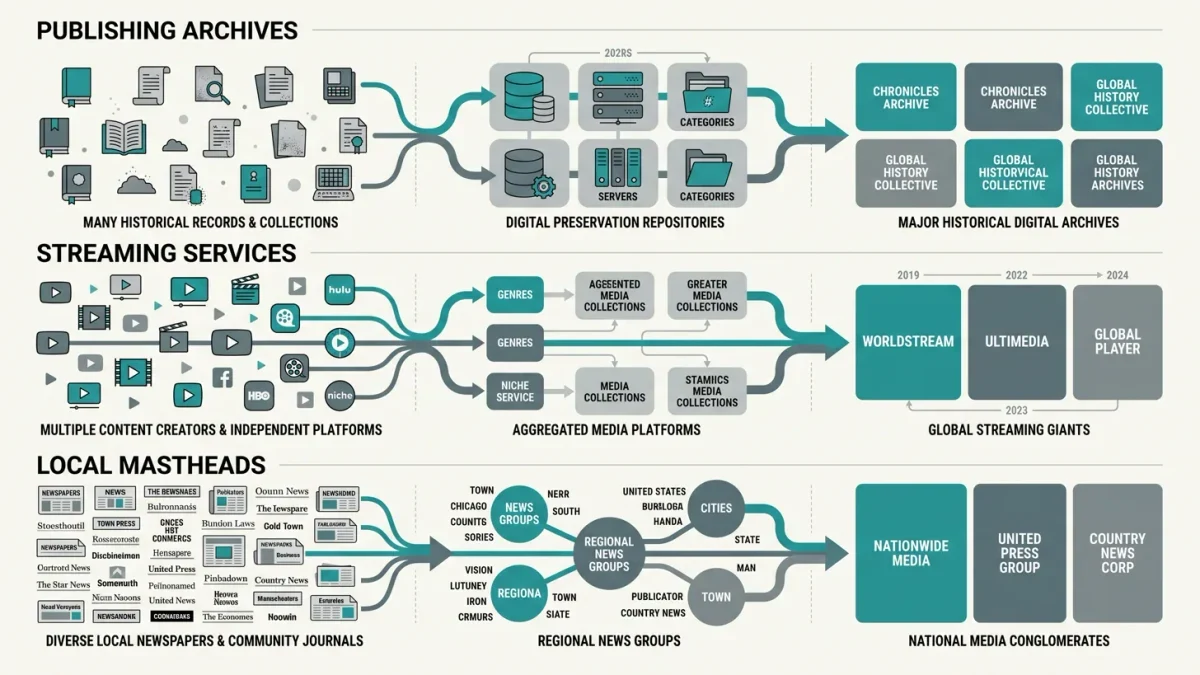
Omnicom completed its all-stock acquisition of The Interpublic Group of Companies on November 26, 2025, per the company's announcement, closing a roughly $9 billion deal first agreed in December 2024 and creating the largest marketing and advertising group in the world by revenue. For the PR industry, the completion date matters more than the announcement date: the holding-company structure that separated Ketchum (Omnicom) from Weber Shandwick, Golin and FleishmanHillard (IPG) formally ended.
What changed on day one
PR networks on both sides keep their brands for now, but they now share owners, procurement, real estate and — eventually, in some combination — back-office infrastructure. The deal's stated logic is $750 million in annual cost synergies, and synergy programs of that size are where duplication gets eliminated. Agency holding companies rarely publish the org chart of what gets merged; the pattern from prior consolidations is shared services first, client-facing roles later.
Where the synergies actually come from
A $750 million synergy target is not an abstraction — it is a plan with line items, and the line items are predictable. Procurement is first: two groups buying research subscriptions, software, media audit services and production capacity separately start buying once, at better rates. Real estate follows, as overlapping offices in the same cities consolidate. Then shared back office — finance, HR, IT, legal — where no client ever sees the difference. These moves cut cost without touching a single client relationship, which is why they come first in every integration playbook.
What comes later is harder and more visible: overlapping agencies in the same market, duplicate practice leads, and eventually the question of which brands survive. Holding companies historically delay those decisions because client revenue walks out with confused accounts. But a target of this size does not get met on procurement alone, and the arithmetic implies brand consolidation eventually. Nobody has announced which names merge — which itself is information: the decisions are still open, and open decisions are when clients have influence.
For staff inside the affected networks, the same logic reads as a timeline. The safest positions are those tied to named client revenue; the exposed ones are internal functions duplicated on the other side of the deal. Senior operators who leave early — by choice or otherwise — are the founding class of the next boutique wave.
Why PR should read this as an industry story
Three angles deserve attention beyond the financial pages. First, talent liquidity. Integration periods historically trigger senior departures, and each departing agency leader is a potential indie founder — good news for the independent sector that already competes on the holding companies' turf. Second, client conflicts and reviews. When formerly competing agencies share a parent, clients with conflicts re-evaluate rosters, and the first post-merger agency reviews will reshape the mid-market. Third, the precedent. Per Adweek's industry roundup, 2025 was a record year for media and marketing consolidation, and PR assets are increasingly portfolio pieces inside groups whose center of gravity is advertising, data and AI tooling. PR practitioners who assumed their industry's structure was static now have evidence otherwise.
Questions buyers should ask now
If your agency now sits inside the merged group, the questions to put to your account lead are direct and answerable:
- Which of our competitors are served by agencies under the same parent, and does any current or planned engagement create a conflict?
- Who exactly leads our account in twelve months, and what is the retention picture on that team?
- Which back-office functions serving us are scheduled to consolidate, and what is the transition plan if our reporting or billing changes hands?
- If our agency's brand is later folded or merged, what happens to our contracts and our institutional knowledge?
Vague reassurance on any of these is a data point. Integration periods are precisely when roster decisions are cheapest to revisit and most expensive to sleep through.
The first-year scorecard to watch
Big mergers are judged on lagging indicators, and the PR-relevant ones are countable. Client retention at the merged networks over the first four quarters — which accounts stayed, which went to review, which quietly moved to independents — is the clearest verdict on whether consolidation damaged service. Senior departures are second: partner-level exits compound, because each one takes relationships and a slice of institutional memory. The third is investment direction, readable in hiring and capability announcements: whether the group's center of gravity shifts further toward data and AI tooling at the expense of craft functions.
None of these will be announced as a scorecard. They surface in trade coverage, LinkedIn announcements and the movement of accounts — which is where the industry's real annual report gets written, regardless of what the synergy slide says.
The independent counterweight
The counter-trend is equally documented: independent and owner-led firms have gained share among clients seeking neutrality, especially where clients are competitors of holding-company customers. A mega-group's conflict map is an indie agency's pitch deck. Expect the boutique founding wave of 2026 to cite this deal for years.
What to do about it
If you buy PR services, review your agency's ownership position and conflict exposure now, before integration decisions make the map for you. If you sell PR services — in-house or agency — the lesson is about pricing power: consolidation on the supply side raises the strategic value of specialists who own a niche, a relationship or a capability the merged giants will take time to replicate.
Per Omnicom's announcement, November 26, 2025; industry context per Adweek, 2025.